World Environment Day 2026: Why Artists Are Emerging as Powerful Voices in the Climate Movement
As the world observes World Environment Day 2026, the urgency of addressing climate change continues to dominate global conversations. Governments, scientists, and environmental organisations play a crucial role in shaping awareness and action. Alongside them, artists are becoming important contributors to the climate movement because they help people engage with environmental concerns in ways that facts and figures alone often cannot.
Climate change is one of the most complex challenges facing humanity. Scientific reports provide essential evidence. Yet they do not always reach wider audiences on an emotional level. Art helps bridge this gap by turning environmental concerns into experiences that feel accessible, relatable, and thought-provoking. Through exhibitions, installations, paintings, photographs, and public art projects, artists are creating spaces where people can reflect on the future of the planet through feeling as much as information.
The growing role of artists in climate conversations lies in their ability to make environmental issues visible, personal, and culturally resonant. Rising temperatures, water stress, pollution, biodiversity loss, and the changing relationship between people and nature can often feel distant until they are placed inside a story, an image, or a public experience. Artists help create that connection. Their work reminds people that climate change is not only an environmental issue; it is also a human issue that affects communities, livelihoods, health, memory, and future generations.
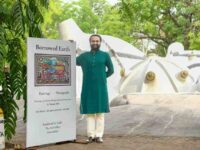
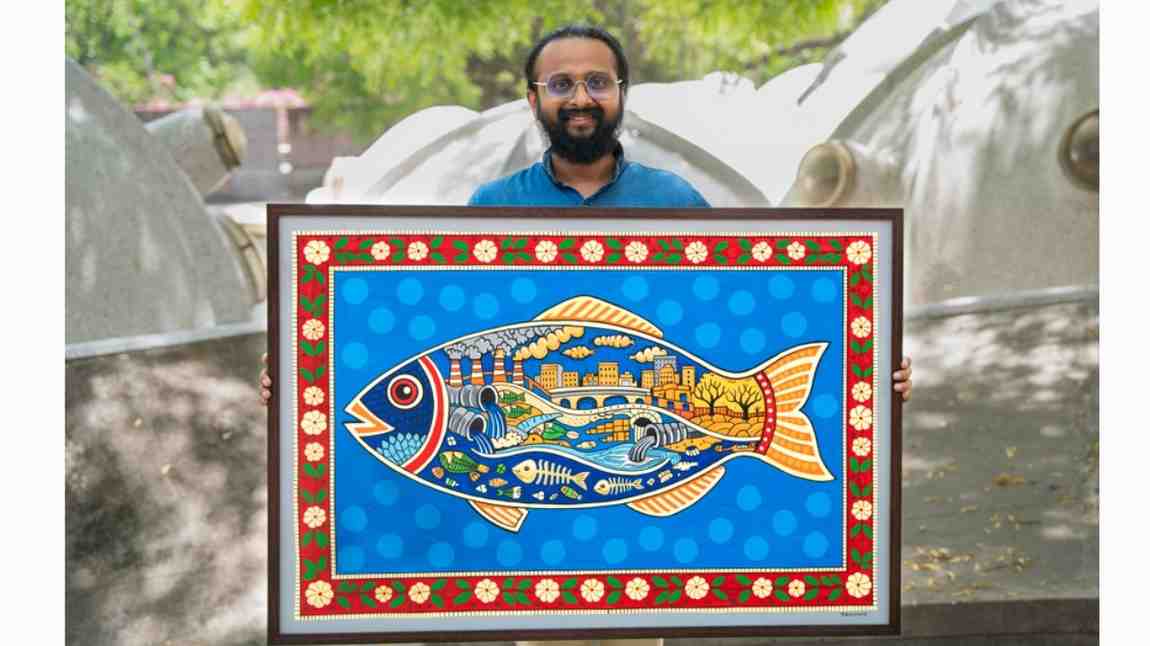
A notable example of this approach is Borrowed Earth, an exhibition by Ahmedabad-based filmmaker and visual artist Tanmay Shah. Presented at Amdavad ni Gufa, Ahmedabad from March 31 to April 6, 2026, the exhibition brought together 26 acrylic paintings and 26 photographs developed from years of visual observation. More than 1500 visitors, including students and young viewers, experienced the show.
Borrowed Earth explores humanity’s relationship with nature and the responsibility each generation carries forward. The title itself conveys a powerful message. The Earth is not something we own without consequence. It is something we temporarily inherit and hold in trust for future generations. Through a series of artworks, the exhibition examined the fragile connection between human progress, natural systems, and environmental responsibility.
What makes exhibitions like Borrowed Earth significant is their ability to spark conversations beyond traditional environmental circles. The works did not rely on slogans or direct warnings. They invited visitors to reflect on everyday choices, patterns of consumption, and the broader impact of human activity on the natural world. Instead of presenting solutions directly, such artistic works create space for introspection and dialogue. They encourage audiences to consider their own role in shaping a more responsible future.
Around the world, cultural institutions, artists, and public platforms are increasingly bringing environmental themes into public life. Museums, galleries, schools, and community spaces have become important platforms for climate conversations. These creative expressions support scientific and policy-led efforts by reaching audiences through emotion, imagination, and storytelling.
As environmental challenges continue to intensify, the importance of public engagement cannot be overstated. Awareness alone is often not enough. People must feel connected to an issue before they begin to respond to it meaningfully. Art has the power to foster that connection by making abstract environmental concerns tangible, personal, and emotionally accessible.
For younger audiences, this role becomes even more important. Many students today are growing up with climate anxiety as a background reality. They hear about global warming, pollution, water stress, and the pressure on natural systems. Yet they may not always know how to process that information. Art gives them a way to ask questions, observe differently, and develop a sense of ecological responsibility without beginning only from fear.
This World Environment Day, the growing intersection of art and environmental advocacy highlights the many ways in which climate conversations are evolving. Exhibitions such as Borrowed Earth show how creative expression can contribute to a broader understanding of sustainability. They encourage individuals and communities to reflect on their relationship with the planet and their responsibility toward its future.
In a time when climate change is shaping not only ecosystems but also everyday human life, artists are emerging as powerful voices because they help people see what is often overlooked. They make the distant feel close, the abstract feel personal, and the familiar worth noticing again. Through initiatives such as Borrowed Earth, art becomes more than visual expression. It becomes a way of deepening public consciousness around the world we share and the future we leave behind.
Atul Tiwari is a seasoned journalist at Mumbai Times, specializing in city news, culture, and human-interest stories. With a knack for uncovering compelling narratives, Atul brings Mumbai’s vibrant spirit to life through his writing.